
Plans
Where your drafted and committed plans live, how to review a draft before it commits, and what asambl notices once a week is in place.
Every plan asambl drafts lands on the Plans page. It is the record of what you planned and when, separate from the calendar, which is where those plans became time.
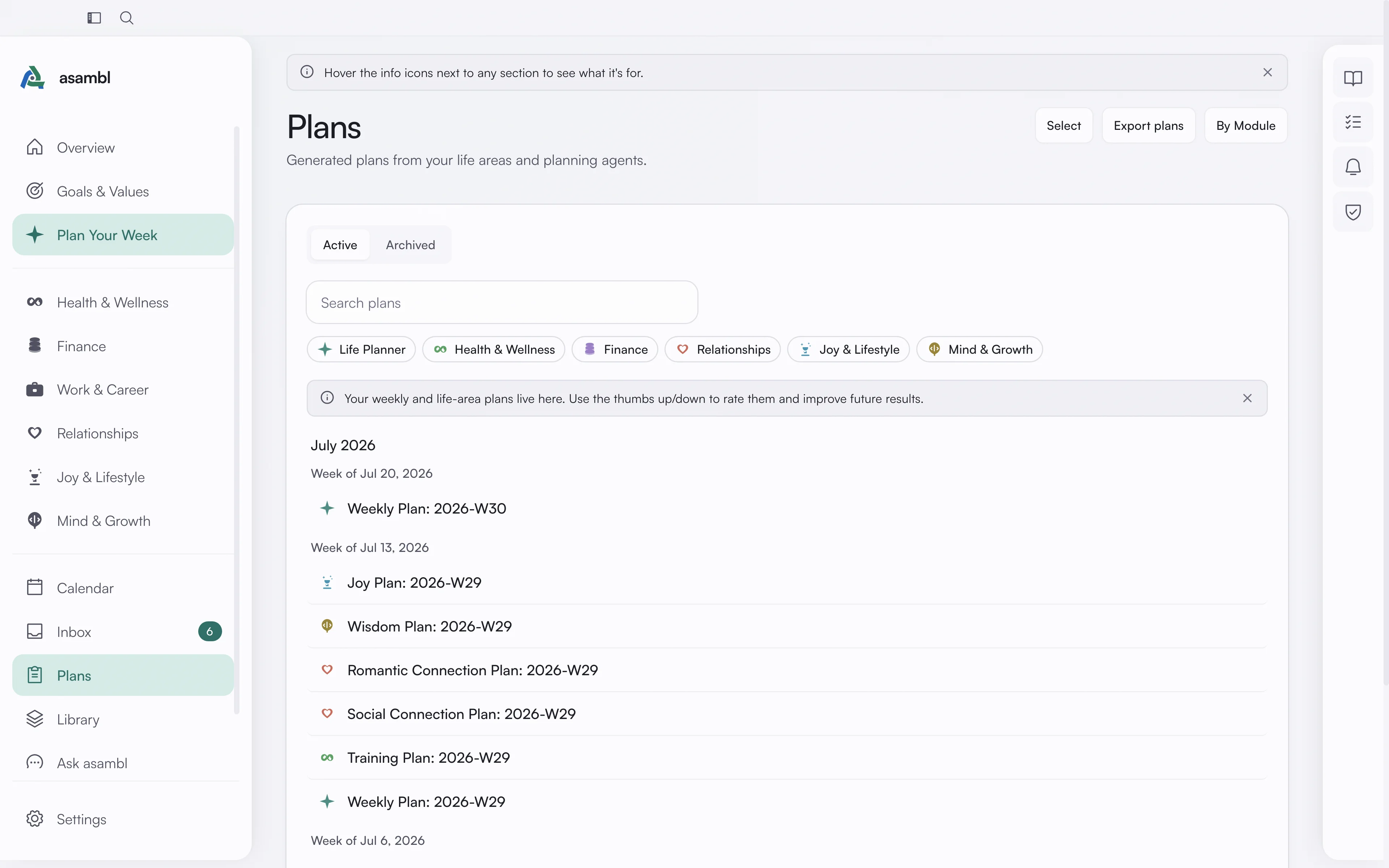
Reviewing a draft before it commits
Plans are drafted in a dry run first. Nothing is written until you say so.
The draft opens in a review window showing what asambl produced. You have three choices:
- Accept it, and the plan commits.
- Amend it: tell asambl what is wrong in plain language, and it regenerates with your feedback applied. Useful when the shape is right but a few blocks are not.
- Discard it and start again.
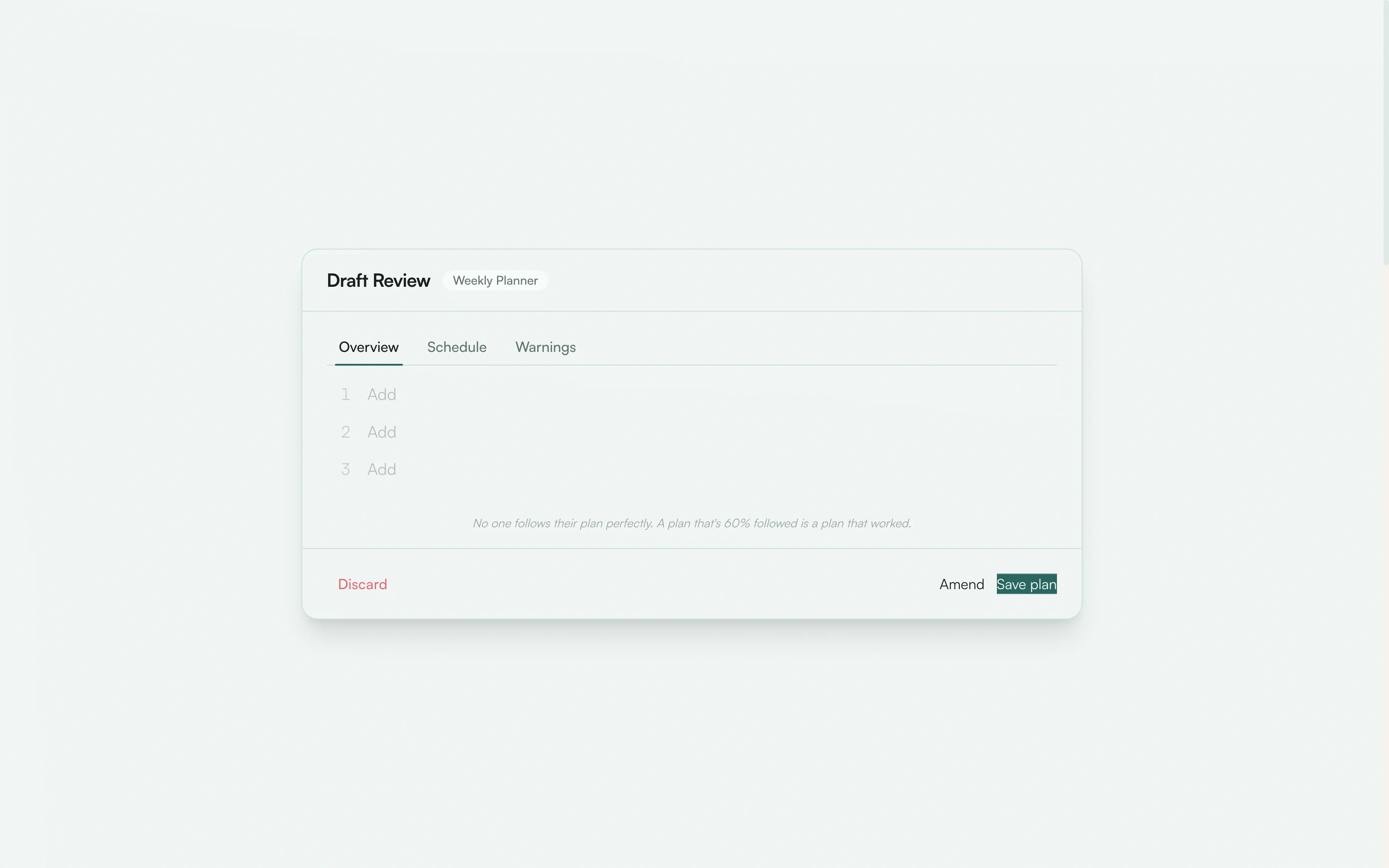
This is why nothing lands on your calendar unannounced. The draft is the gate.
What asambl notices
When you commit a weekly plan, asambl points out one thing about its shape. An area you turned on that got no time. A priority with nowhere in the week to happen. It comes as an observation and a question, not a verdict.
You can tell it the shape is intentional, or push back on the reading. Either way it takes that into next week rather than raising the same thing again.
Control how much of this you want in Settings, under Nudges, which also governs what happens when a week goes by without a plan.
Active and archived
Plans open on the Active tab. Archive a plan you are done with and it moves to Archived, where you can restore it to active or delete it permanently. Archiving is reversible; deleting is not.
You can pin up to five plans to keep them at the top, which is useful when a quarterly plan should stay in reach while weekly ones come and go.
Rating a plan
Rate a plan and mark off what you actually completed. Both feed back into how asambl drafts the next one, so a week you rated poorly and barely completed changes what comes next rather than being repeated.
Exporting
Export your plans from the toolbar. They leave as JSON with their content and your feedback attached. Your plans are also plain Markdown files on your computer, so you can read them in any editor without exporting at all.
Where a plan comes from
Plans are drafted by the weekly ritual. See Weekly planning for the ritual itself, How planning works for what runs behind a single draft, and Calendar for how accepted blocks become real events.